Your Own Private Island for the Price of a Motel: The Overnight Oubli Experience
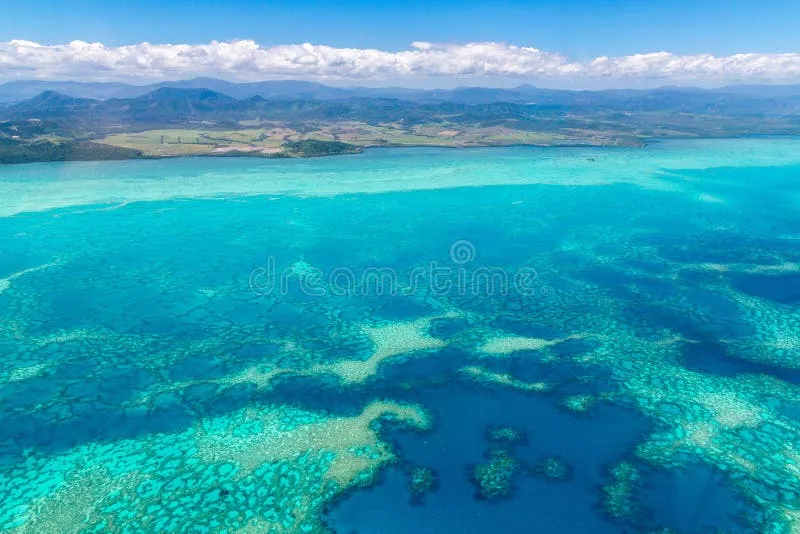
Photo: small tropical islet turquoise lagoon New Caledonia aerial view, via thumbs.dreamstime.com
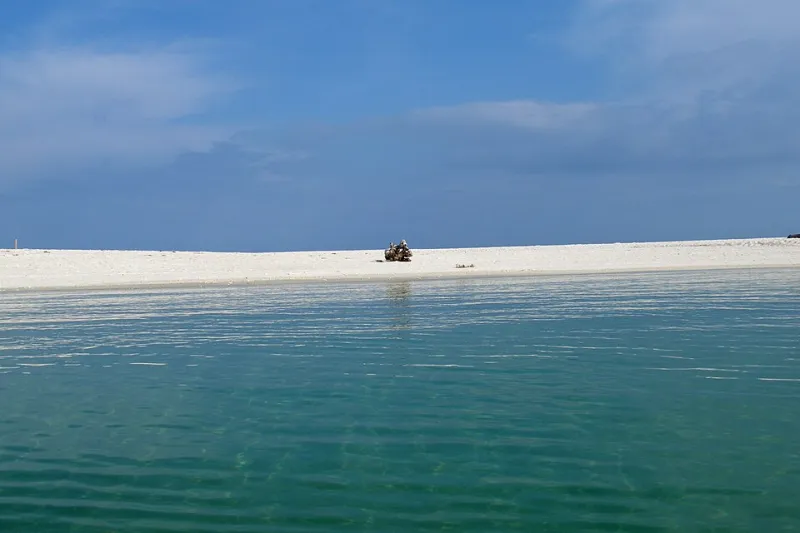
There's a moment, usually around 5:30 in the morning, when the light hits the water just right and you realize something slightly absurd: you are the only human being on this island. All of it. The whole thing. Your footprints are the only ones on the sand, and the nearest neighbor is a reef shark cruising the shallows about fifty yards out.
This is what New Caledonia calls an oubli experience — an overnight stay on one of the tiny, barely-there islets scattered across the UNESCO-listed southern lagoon. The word comes from oublier, French for "to forget," and locals use it affectionately for these specks of sand and pine that seem forgotten by everything except the tide. Some Americans who've made the trip call it the best travel money they've ever spent. They're not wrong.
What Exactly Is an Oubli?
The southern lagoon behind Nouméa is dotted with small islands — some with names you'll find on a map, most you won't. A handful of them have simple accommodations: basic fare (a covered bungalow or fare-style hut), an outdoor kitchen setup, rainwater tanks, and not much else. No front desk. No room service. No Wi-Fi worth mentioning.
What you do get is the reef at your doorstep, a lagoon the color of a swimming pool, and a silence so complete you can hear fish nibbling coral off the shoreline. It's the kind of place where the daily schedule is dictated by the sun and the tide, not a resort activities board.
How Booking Actually Works
Here's the thing that surprises most US travelers: you can't just show up. These islets are typically family-run, often by Kanak or local Caldoche families who've fished these waters for generations, and bookings happen the old-fashioned way — by phone, email, or through a local tour operator who knows who answers when.
A few practical notes:
- Book weeks ahead in high season (December–February and the July school holidays). Availability is genuinely limited — we're talking one or two parties per islet, not dozens of rooms.
- Shoulder months like May and September are easier to book and often cheaper.
- Expect to pay somewhere in the range of $80–150 USD per night for the whole islet, depending on the property and group size. Yes, for the whole thing.
- Most operators will arrange boat transfer from Nouméa or the southern mainland, usually included or for a modest extra fee. Confirm this before you go — being stranded on the mainland with a cooler full of food and no boat is a bad start to a vacation.
The Self-Catering Reality (Pack Like You Mean It)
Let's be blunt: nobody is bringing you breakfast. These islets run on the self-catering model, which means you're the chef, the dishwasher, and the entertainment director.
Before departure, hit a Nouméa supermarket — Casino, Carrefour, or the markets at the port — and stock up like you're preparing for a hurricane that's actually going to be lovely. Think:
- Fresh baguettes and cheese (this is still France, after all)
- Snorkeling-friendly protein: canned tuna, sausages, eggs
- Plenty of drinking water if the islet doesn't have a reliable tank
- A cooler with ice — your new best friend
- Sunscreen (reef-safe, please), a hat, and more water than you think you need
Cooking is usually on gas burners or charcoal. Bring a headlamp, because once the sun drops around 6 p.m., it drops hard in the tropics, and there are no streetlights on an island with no streets.
What a Day Out Here Looks Like
Wake with the sun. Swim before breakfast — the water is glassy in the early hours and the fish haven't learned to be shy. Snorkel the house reef, which in many cases rivals anything you'd pay a boat charter to reach.
Midday is for shade, books, and naps. This is not a destination with an itinerary. If you need stimulation, this is not your destination.
Late afternoon, walk the perimeter of your island. On some oubis, that takes ten minutes. On others, a leisurely hour. Watch the colors shift from turquoise to silver to that impossible violet the South Pacific does at dusk. Cook dinner. Eat it with sand between your toes. Sleep.
Why This Beats an Overwater Bungalow
Let's do the math, because Americans love math. A garden-view overwater bungalow in French Polynesia runs $800–1,500 a night, per couple. A whole-islet rental in the southern lagoon, including your boat transfer, often lands under $200 a night — split it with friends and you're at hostel prices for a private island.
More importantly, the experience is different in kind, not just cost. A resort bungalow gives you a view of the lagoon. An oubli gives you the lagoon itself, unmediated. You're not watching paradise through a deck railing. You're standing in it, alone, at 6 a.m., wondering why you ever booked a cruise.
A Few Honest Caveats
This isn't for everyone, and we'd be doing you a disservice to pretend otherwise. There are mosquitoes at dusk. There's no air conditioning. If the weather turns, you'll feel it. And the isolation that makes the experience magical can feel genuinely remote if you're not prepared — bring a charged phone, confirm your pickup time, and let someone on the mainland know your plans.
But if you're the kind of traveler who thinks the best hotel amenity is the absence of other people, the oubli might be the best-kept secret in the South Pacific. Just don't tell too many people. We like it quiet out here.