Rain on the Reef: Your Wet-Day Playbook for New Caledonia's South
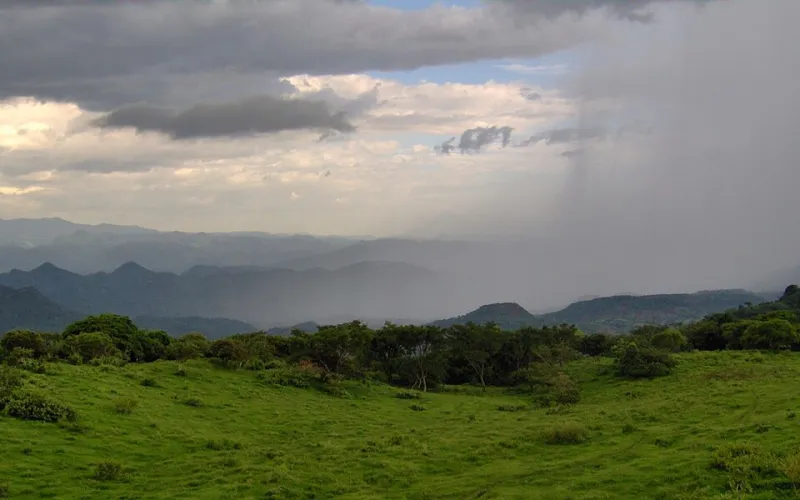
Photo: Marden Nolasco, CC BY-SA 4.0, via Wikimedia Commons
Nobody dreams about their South Pacific trip and pictures rain. But if you're traveling anywhere in the tropics for more than four days, weather is not a matter of if. It's a matter of what you do at 9 a.m. when the sky goes gray and your snorkel plan dissolves.
The good news, and I mean this: a wet day in New Caledonia's south can be genuinely great. The rain is warm, the squalls are usually short, and the south has more indoor options than its beach-poster reputation suggests. Think trip insurance, not doom.
First, learn the local weather personality
Two things drive rain here. Trade-wind showers roll through fast — think a Florida afternoon thunderstorm, fifteen to forty minutes of commitment, then sun. And then there are the bigger systems, mostly in the wet season from November through April, that can park for a day or two and occasionally, rarely, mean cyclone activity.
So the first question isn't should I cancel today. It's what kind of rain is this. Check the radar on a local app, look west, and give it twenty minutes.
The decision tree
Is there thunder or lightning? Don't swim. Not in the lagoon, not in a pool, not on an exposed beach. Move to step two.
Is it a fast-moving shower with blue sky behind it? Wait it out under a cafe awning. Order a coffee. Reassess at twenty-minute intervals. This is 70 percent of your rain days.
Has it been raining hard for more than two hours with no break in sight? Time to call an audible. Go to the indoor list below.
Is the rain heavy enough that roads are pooling, or has a system been sitting for a full day? Skip the lagoon entirely — runoff makes nearshore water murky and reef visibility terrible anyway, and you'd be wasting a good snorkel.
Is a cyclone watch active? Stay put, follow official guidance, and don't drive into the far south. This is a real but rare scenario, and it's the one time to be genuinely conservative.
Nouméa's dry-land circuit
This is where a wet day in the capital actually pays off. There's enough here for two full days out of the rain.
The Aquarium des Lagunes in Anse Vata is genuinely excellent — small, beautifully designed, and a great primer on the reef you're about to see. Go early; it fills on rainy days.
The Musée de Nouvelle-Calédonie covers the island's archaeology and Kanak cultural history, and it's the best single orientation to the place you're visiting.
The Maritime Museum near the port is tighter and more niche, but it's a fine hour.
The Musée du Bagne tells the penal colony story in the actual buildings, which is a different experience than a text panel in a museum case.
The Jean-Marie Tjibaou Cultural Centre — technically just outside the city core, but easily reached by bus or taxi — is worth an afternoon on architecture alone. The pavilions were designed by Renzo Piano, and they sound extraordinary in rain.
Add the covered market at Port Moselle, a long lunch in Faubourg Blanchot, and a coffee shop or two, and you've filled the day without once looking at a soggy beach towel.
What's actually better wet
The far south is one of the few places where rain improves the show. The waterfalls near Yaté swell dramatically when it's been pouring, and Blue River Provincial Park goes lush and dramatic in a way that's honestly more photogenic than a dry day.
Just go with a guide. The southern roads get slick and occasionally flood at crossings, and a driver who knows the tracks is worth every dollar.
Also: swimming in warm rain is glorious, if there's no lightning. Locals do it. As long as you're not on an exposed sandbar, it's one of those small travel moments you'll remember longer than a perfect beach photo.
When the ferry cancels
Betico crossings to the Isle of Pines get scratched for swell, not rain. If your island day gets blowtorched, don't panic-reshuffle your entire week — most operators will rebook you to the next sailing, and travel insurance with interruption coverage is cheap peace of mind for exactly this.
Build one flexible day into any island plan. It's the single best piece of trip insurance you can buy, and it costs you nothing but a little advance planning.
Pack the day before, not the morning of
Two dry bags. One poncho that actually packs flat. Sandals you don't mind soaking. A power bank, because wet days mean a lot of time in cafés. And a downloaded offline map, since the mobile signal thins out fast once you're south of the city.
That's the whole plan. Weather happens. In the south of New Caledonia, it rarely ruins anything that a coffee, an aquarium, and a little patience can't fix.